



Updated 12th December 2025 | Fact Checked By Jess Knauf, Co-Founder, Family Law Service
Quick Summary: Filing for Divorce
- How to file for divorce in England & Wales is now done entirely online through the government portal, with no need to prove fault since the 2022 no-fault divorce law
- The process takes a minimum of 6-7 months due to mandatory waiting periods, and costs £612 in court fees
- You’ll need your marriage certificate, spouse’s address, and details of any children under 18 to complete the application
- The biggest mistake people make is finalising their divorce before securing a financial order, which leaves them vulnerable to future claims
- Joint applications are faster than sole applications, possibly saving time and reducing conflict
- While you can file for divorce yourself, getting legal help on financial or child arrangements can save you thousands in the long run
Understanding How to File for Divorce in England & Wales
How to file for divorce can feel overwhelming when you’re already dealing with the emotional strain of a relationship ending. You’re probably wondering where to start, what documents you’ll need, and how long the whole process will take.
The good news? Filing for divorce in England and Wales has become much more straightforward since the introduction of no-fault divorce in April 2022. You no longer need to blame your spouse or wait years to separate. The online system is designed to be accessible, and thousands of people successfully go through it every year.
This guide walks you through exactly how to file for divorce, what to expect at each stage, and the common pitfalls to avoid. Whether you’re just starting to think about separation or you’re ready to begin the application, we’ll cover everything you need to know.
Am I Eligible to File for Divorce?
Before you can file for divorce in England and Wales, you need to meet three basic requirements:
- Your marriage must be at least one year old. This is measured from the date of your marriage ceremony, not when you started living together. If you’ve been married for less than a year, you cannot apply for divorce yet, though you may be able to apply for an annulment in certain circumstances.
- Your marriage must be legally recognised in the UK. Most marriages conducted abroad are recognised, but if you married in a country with different marriage laws, you should check your marriage is valid under England & Wales law.
- England or Wales must be your permanent home. Technically, either you or your spouse must be habitually resident in England or Wales, or domiciled here. In practice, this means England or Wales is where you normally live or consider your permanent home.
You do not need your spouse’s permission to file for divorce. Under the current law, you simply need to state that the marriage has irretrievably broken down. Your spouse cannot prevent the divorce by refusing to cooperate, though they can delay it slightly.
“At Family Law Service, we often see clients worried they can’t divorce because their partner won’t agree,” says Jess Knauf. “The truth is, if your marriage is over, you can file for divorce. The law recognises that one person shouldn’t be trapped in a marriage against their will.”
What Documents Do You Need to File for Divorce?
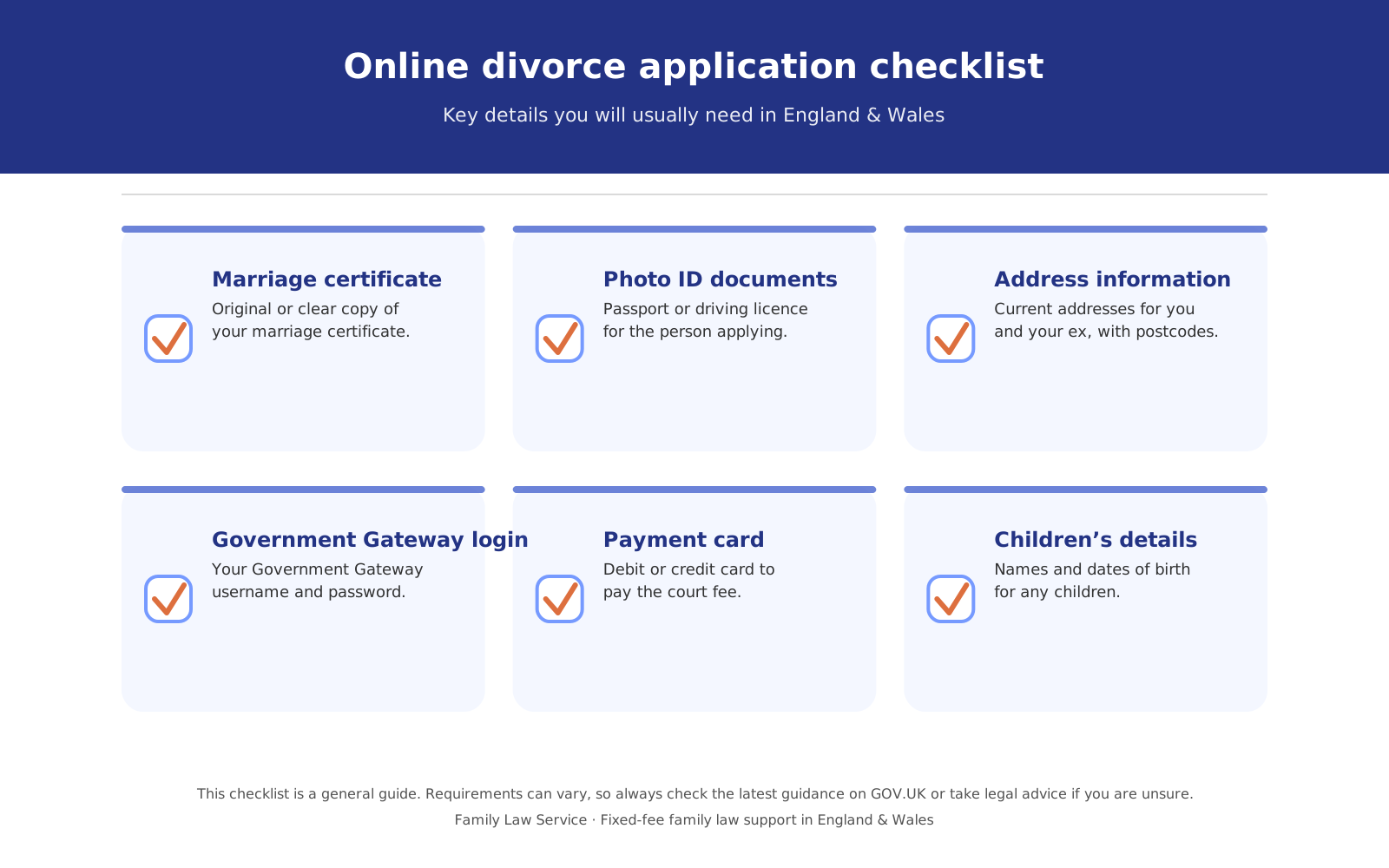
Getting your documents ready before you start makes the application process much smoother. Here’s what you’ll need:
Your original marriage certificate or a certified copy. The court needs to see official proof of your marriage. If your certificate is not in English or Welsh, you’ll also need a certified translation from a qualified translator.
Full names and addresses. You’ll need the correct legal names for both you and your spouse, exactly as they appear on your marriage certificate. You’ll also need an address where the court can send documents to your spouse. If your names have changed since the wedding, you will need the deed poll certificate.
Details of any children under 18. This includes their full names and dates of birth. The court needs to know about children from your marriage, but the divorce application itself doesn’t decide child arrangements.
Your Government Gateway login details. You’ll create these when you start the online application. Keep your login information safe, as you’ll need to access the portal multiple times throughout the process.
Payment method for the court fee. The current fee is £612, payable by debit or credit card when you submit your application.
If you cannot find your marriage certificate, you can order a replacement from the General Register Office. This usually takes about a week and costs around £11. For marriages outside England and Wales, you may need to contact the relevant authority in the country where you married.
Joint Application vs Sole Application: Which Should You Choose?
One of the first decisions when you file for divorce is whether to apply jointly with your spouse or apply on your own as a sole applicant.
Joint Applications
A joint application means you and your spouse apply together for divorce. Both of you agree the marriage has broken down, and you complete the application as a team.
Benefits of joint applications:
- Faster process with fewer steps
- No need for one person to “serve” papers on the other
- Usually feels less adversarial
- Costs can be split between you
- Can save about 4-5 weeks compared to sole applications
Joint applications work best when you’re both on reasonably good terms and agree it’s time to divorce. You don’t need to agree on everything, just on the fact the marriage is over.
Sole Applications
A sole application means you apply for divorce on your own. Your spouse receives the application from the court and must acknowledge it, but they don’t need to agree with your decision.
When sole applications make sense:
- Your spouse refuses to engage or cooperate
- There’s been domestic abuse or controlling behaviour
- You want to keep control of the process timing
- Your spouse’s whereabouts are unknown
- Communication has completely broken down
“We worked with a client whose husband refused to discuss divorce,” Jess recalls. “She filed as a sole applicant, and although he initially didn’t respond, the court allowed her to proceed anyway. He couldn’t stop the divorce, he could only slow it down slightly.”
The sole application process takes longer because the court must formally serve the papers on your spouse and wait for their acknowledgement. If they don’t respond within 14 days, you can ask the court to proceed without their acknowledgement.
How to File for Divorce Online: Step-by-Step Process
Step 1: Create Your Government Gateway Account
Visit www.gov.uk/apply-for-divorce and create your Government Gateway login if you don’t already have one. This is the same system used for Self Assessment tax returns and other government services.
You’ll be asked to verify your identity and create a secure password. Keep these details safe, as you’ll need them throughout your divorce.
Step 2: Start Your Application
Once logged in, the online system guides you through a series of questions. You’ll provide:
- Your personal details and address
- Your spouse’s personal details and address
- Your marriage details and certificate information
- Information about any children under 18
- Whether you’re applying jointly or as a sole applicant
The system saves your progress, so you can complete it over several sessions if needed. Most people take 30-45 minutes to complete the full application.
Step 3: Upload Your Marriage Certificate
You’ll need to upload a clear photo or scan of your marriage certificate. The image must be readable and show the full document. If the court cannot read your upload, they’ll contact you to provide a better copy.
Step 4: Write Your Statement
You’ll need to write a short statement explaining that the marriage has irretrievably broken down. This doesn’t need to be detailed or include personal information. A simple statement is sufficient, such as:
“The marriage has broken down irretrievably. We have grown apart and no longer wish to remain married.”
Avoid lengthy explanations or assigning blame. The law doesn’t require you to prove anything beyond the fact your marriage is over.
Step 5: Pay the Court Fee
The divorce application fee is £612. You’ll pay this by debit or credit card when you submit your application.
If you’re on a low income or receive certain benefits, you may qualify for fee remission (help with fees). You can check your eligibility and apply through the Help with Fees service before starting your divorce application.
Benefits that may qualify you for help include:
- Universal Credit
- Income Support
- Income-based Jobseeker’s Allowance
- Pension Credit (Guarantee Credit)
- Income-related Employment and Support Allowance
Step 6: Submit Your Application
Once you’ve completed all sections and paid the fee, you can submit your application. The court will review it, and if everything is in order, they’ll issue it within 2-4 weeks.
For joint applications, both applicants receive confirmation from the court. For sole applications, the court sends the application to your spouse for acknowledgement.
Want to get started? Just enter your name and we’ll guide you through the next steps.
What Happens After You File for Divorce?
The Acknowledgement Stage (Sole Applications Only)
If you’ve filed a sole application, the court sends a copy to your spouse along with an acknowledgement form. Your spouse has 14 days to return this form confirming they’ve received the application.
Your spouse can indicate on the form:
- They’ve received the application (acknowledgement)
- They agree with the application
- They disagree about jurisdiction (where the divorce should be heard)
- They dispute the validity of the marriage itself
Importantly, your spouse cannot stop the divorce simply because they don’t want one. The only valid grounds to contest are jurisdictional issues or if the marriage isn’t legally valid.
If your spouse doesn’t respond within 14 days, you can apply for the court to proceed without acknowledgement. This is called “deemed service” and allows your divorce to continue.
The 20-Week Reflection Period
Once your application is issued, there’s a mandatory 20-week reflection period before you can apply for your Conditional Order. This waiting period exists to give both parties time to:
- Consider the decision to divorce
- Arrange finances and property division
- Agree on arrangements for children
- Seek legal advice
- Complete financial disclosure
This period cannot be shortened or fast-tracked under any circumstances. It applies to both joint and sole applications.
What you should do during the reflection period:
Sort out your finances. Begin gathering information about your assets, debts, pensions, and income. Start discussing how you’ll divide everything fairly.
Seek legal advice. Even if you’re managing the divorce application yourself, professional advice on financial settlements can protect your future. Many people underestimate the value of pensions or don’t realise they could be entitled to ongoing maintenance. Our ai barrister review currently costs £9.50 and can give you a guide on what the courts would order.
Agree child arrangements. Decide where children will live, how much time they’ll spend with each parent, and how you’ll make decisions about their education, health, and welfare.
Prepare your financial consent order. This is the legal document that makes your financial agreement binding. You should have this ready to file before your divorce is finalised.
“We often see people rush through the divorce application, then realise they haven’t sorted out who keeps the house or how they’ll divide the pension,” says Jess. “Use this reflection period wisely. It’s there to protect you from making hasty decisions you’ll regret later.”
Applying for Your Conditional Order
After the 20-week reflection period ends, you can apply for your Conditional Order. This used to be called a Decree Nisi.
The Conditional Order is the court’s statement that it agrees you can divorce. It’s not the final divorce, but it’s a significant milestone confirming the court has approved your application.
How to apply for a Conditional Order:
- Log back into the online divorce service
- Confirm you want to proceed with the divorce
- For joint applications, both parties must confirm
- For sole applications, only the applicant needs to apply
There’s no additional fee for the Conditional Order. The court reviews your application and usually grants it without a hearing within 4-5 weeks.
The court sends you the Conditional Order document, which confirms the date it was granted. You must wait six weeks and one day from this date before you can apply for the Final Order.
Applying for Your Final Order
The Final Order legally ends your marriage. This used to be called a Decree Absolute.
You can apply for your Final Order six weeks and one day after your Conditional Order is granted. For most people, this is the final step in the divorce process.
Critical: Sort out finances before the Final Order
This cannot be stressed enough. You should have a financial order in place before you apply for your Final Order.
Without a financial order, your financial claims against each other remain open indefinitely. This means:
- Your ex could make a claim against your inheritance
- Future assets or property could still be divided
- Pension rights remain unsettled
- Maintenance claims can be made years later
“We worked with a woman who divorced 15 years ago without a financial order,” Jess explains. “When her ex-husband discovered she’d inherited money from her parents, he made a claim for half. Because they never sorted the finances properly, the claim was valid. It cost her tens of thousands in legal fees and settlement.”
A financial order draws a line under your financial relationship. Even if you agree you don’t want anything from each other, you should have this in writing and approved by the court.
How to apply for the Final Order:
- Log into the online divorce service
- Apply for the Final Order (no additional fee)
- The court issues the order, usually within 1-2 weeks
- You receive the Final Order certificate confirming you’re divorced
Once you receive your Final Order, your marriage is legally ended. You’re free to remarry if you wish, and you’re officially divorced.
How Much Does It Cost to File for Divorce?
The court fee to file for divorce is £612. This covers:
- The divorce application
- The Conditional Order
- The Final Order
There are no additional court fees unless you need to make changes to your application or your spouse contests jurisdiction.
Additional Costs to Consider
Legal advice: £300 to £5,000+ While you can handle the divorce application yourself, legal advice on financial arrangements varies widely in cost depending on your situation’s complexity.
Financial consent orders: £500 to £2,000+ A solicitor or paralegal can draft your financial consent order to ensure it’s legally sound and protects your interests.
Property valuations: £300 to £600 If you own property together, you may need a formal valuation if you cannot agree. Most people take the average of three estate agent valuations.
Pension valuations: £2000 to £6000 Pensions can be your most valuable asset. Getting them properly valued by an actuary or PODE is helpful for a fair division.
Mediation: £150 to £300 per person per session If you’re struggling to agree on finances or child arrangements, mediation can be more cost-effective than going to court.
Help with Fees
If you’re on a low income or receive certain benefits, you can apply for help with the £612 court fee. The Help with Fees service assesses your circumstances and may:
- Waive the fee completely
- Reduce the fee to a smaller amount
- Require you to pay in instalments
You can check your eligibility and apply online at www.gov.uk/get-help-with-court-fees.
How Long Does It Take to File for Divorce?
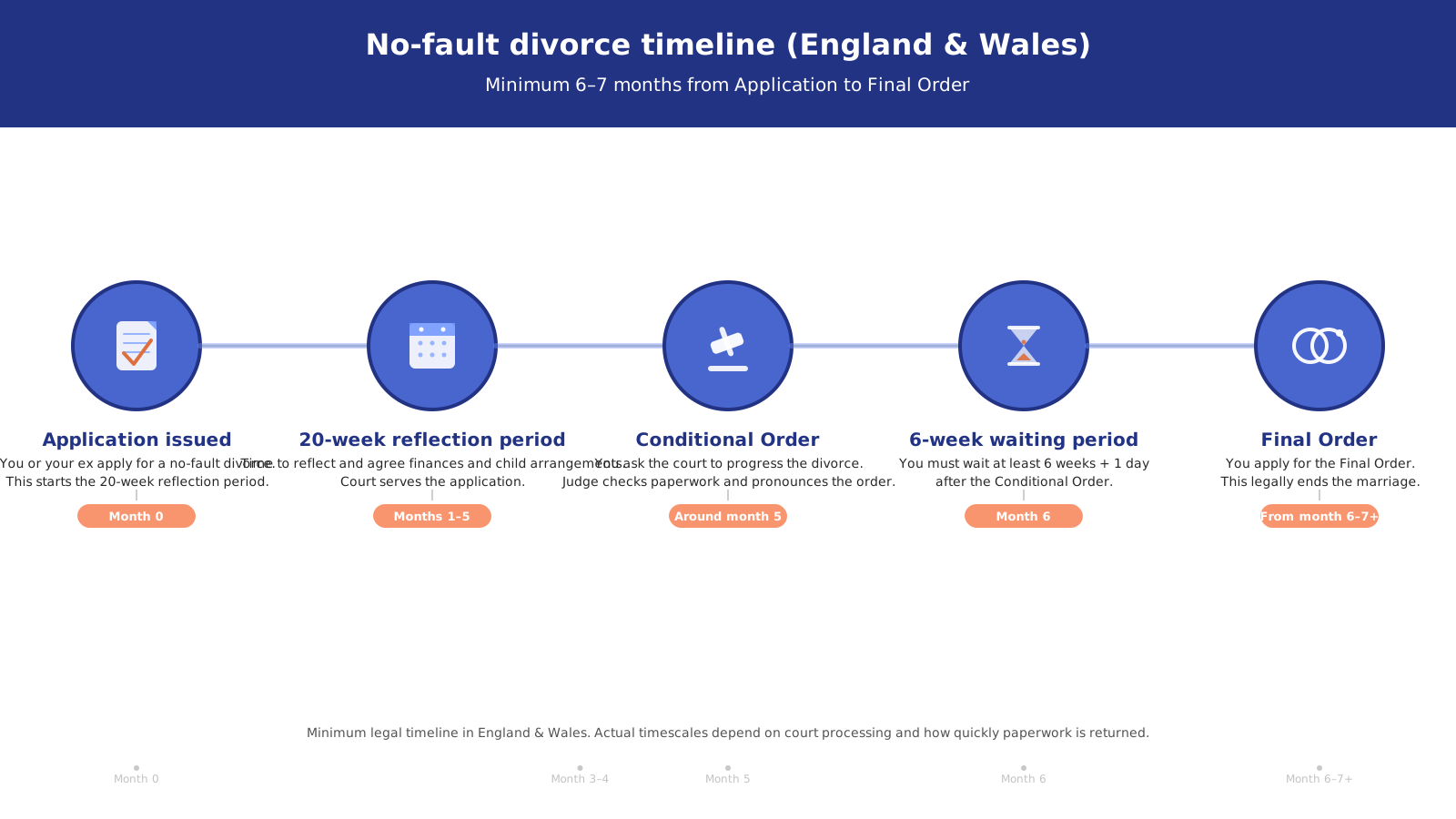
A straightforward, uncontested divorce in England and Wales takes a minimum of 6 to 7 months. This timeline cannot be shortened due to mandatory waiting periods built into the law.
Typical divorce timeline:
Weeks 1-2: Application processing After you submit your application, the court reviews and issues it.
Weeks 2-22: Reflection period The mandatory 20-week reflection period begins from when the application is issued.
Weeks 23-27: Conditional Order You apply for the Conditional Order, and the court grants it (usually within 4-5 weeks).
Weeks 28-33: Waiting period You must wait six weeks and one day after the Conditional Order before applying for the Final Order.
Weeks 34-35: Final Order You apply for the Final Order, and the court issues it (usually within 1-2 weeks).
What Can Delay Your Divorce?
Several factors can extend this timeline:
- Incorrect information on the application: The court returns it for corrections
- Missing documents: Delays while you obtain required certificates or translations
- Spouse not responding (sole applications): Adds several weeks or possibly months, while you apply for deemed service
- Jurisdictional disputes: If your spouse challenges whether England and Wales is the right place for your divorce
- Court backlogs: Occasionally, high volumes can slow processing times
- Complicated financial arrangements: If you’re still negotiating finances at the end of the process
Joint applications typically complete faster than sole applications, averaging around 6-7 months compared to 8-10 months for contested sole applications.
Can You Speed Up the Divorce Process?
The short answer is no, not really. The waiting periods in the law are mandatory and cannot be shortened.
However, you can avoid unnecessary delays by:
Getting your application right first time. Double-check all names, dates, and addresses match your marriage certificate exactly. Upload clear, readable copies of documents.
Responding promptly to court communications. The court sends important emails and letters with deadlines. Missing these adds weeks to your timeline.
Working towards agreement on finances early. Start financial discussions during the reflection period. The sooner you agree on the financial disclosure and then the division of assets, the sooner you can finalise everything.
Using joint applications where possible. If you and your spouse can cooperate enough to apply jointly, you’ll save several weeks of processing time.
Getting professional help. A solicitor can ensure your application is correct, your financial order is legally binding, and you avoid common mistakes that cause delays.
“We see ‘quick divorce’ services advertising unrealistic timelines,” says Jess. “The legal minimums still apply no matter which service you use. The best approach is to do it right the first time, rather than rushing and creating problems that take longer to fix.”
Do You Need a Solicitor to File for Divorce?
You don’t legally need a solicitor to file for divorce. The online application is designed to be user-friendly, and many people successfully complete it themselves.
However, there’s a big difference between filing the divorce application and protecting your financial future.
When You Can Manage Without a Solicitor
You might handle the whole divorce yourself if:
- You are confident in using the government website to apply for divorce
- You have no children together
- You have minimal shared assets (no property, small savings, no pensions)
- You’ve already agreed how to divide everything
- There’s no history of domestic abuse
- Both of you are financially independent
Even in these cases, it’s worth getting a financial consent order drawn up by a solicitor. This usually costs £500-£3,000 and provides certainty that your financial relationship is properly concluded.
When You Should Definitely Get Legal Advice
Professional legal advice becomes essential when:
You own property together. Decisions about who keeps the house, whether to sell, and how to divide equity have long-term consequences. Getting this wrong can cost you tens of thousands.
You have pensions. Pensions are sometimes worth more than the family home. You need expert advice on pension sharing orders and whether it’s fair to offset pensions against other assets.
There are children involved. While the divorce itself doesn’t decide child arrangements, you need to understand your rights and obligations around maintenance, living arrangements, and decision-making.
There’s a significant income difference. The higher earner may need to pay spousal maintenance. The amount and duration require careful negotiation and legal structure.
You have business interests. If either of you owns a business, shares, or complex investments, you need specialist advice on valuation and division.
There’s been domestic abuse. Legal protection and safety planning become paramount. Your solicitor can help ensure you’re protected throughout the process.
Your spouse is hiding assets. If you suspect your spouse isn’t being honest about finances, a solicitor can help you with formal disclosure processes.
“At Family Law Service, we often see clients who’ve tried to do everything themselves, then run into problems they didn’t anticipate,” Jess explains. “Maybe they agreed mum keeps the house, but didn’t realise dad’s pension is worth £300,000. Now they’re facing an unfair settlement that’s hard to unpick. Early advice could have saved them both money and stress.”
Sorting Out Your Finances: The Financial Order
A financial order (also called a financial consent order) is a legal document that sets out how you’ll divide your assets, debts, pensions, and any ongoing maintenance.
This order is approved by the court and makes your agreement legally binding. Once it’s in place, neither of you can make future claims against the other, except in very limited circumstances involving children.
What a Financial Order Covers
Capital assets:
- Property (family home, buy-to-let properties, land)
- Savings and investments
- Vehicles
- Valuable possessions
- Business interests
Pensions:
- Workplace pensions
- Private pensions
- State pension (additional state pension can be shared)
- Pension sharing orders or offsetting arrangements
Income and maintenance:
- Spousal maintenance (ongoing payments from one party to the other)
- Child maintenance (usually dealt with separately through CMS or private arrangement)
- How long maintenance will be paid
- Whether payments can be varied in future
Debts:
- Mortgages
- Credit cards
- Loans
- Overdrafts
Why You Must Get a Financial Order
Even if you trust your ex-spouse completely and have agreed to split everything fairly, you should consider a financial order. Without it:
- Either of you can make financial claims years or even decades later
- Your future inheritance could be claimed by your ex
- Future earnings, property purchases, or lottery wins could be split
- If your ex becomes bankrupt or faces financial problems, their creditors could come after any jointly held assets
- If your ex remarries or has more children, they could still claim against your assets
The only way to achieve a “clean break” and protect your financial future is through a court-approved financial order.
The Financial Order Process
1. Full financial disclosure Both parties must provide complete details of their finances, including:
- Bank statements
- Pension valuations
- Property valuations
- Investment statements
- Details of income and outgoings
2. Negotiation You try to reach an agreement on how to divide everything fairly. This can be done:
- Through solicitors
- In mediation
- Through collaborative law
- Directly between you (though legal advice is strongly recommended)
3. Drafting the consent order Once you’ve agreed, the terms are written into a formal consent order document. This includes precise details of who gets what, payment amounts and timings, and confirmation of a clean break where appropriate.
4. Court approval The consent order is submitted to the court for approval. A judge reviews it to ensure it’s fair to both parties. If approved, it becomes legally binding.
The financial order process typically takes 3-6 months, though complex cases involving significant assets or disputes can take longer.

Child Arrangements and Divorce
Your divorce application requires you to provide details of any children under 18, but the divorce itself does not decide child arrangements.
Child arrangements are dealt with separately and include:
Where children will live. This could be primarily with one parent, or shared between both parents in various arrangements.
How much time children spend with each parent. This includes day-to-day contact, holidays, birthdays, and special occasions.
Who makes important decisions about children. Decisions about education, medical treatment, religious upbringing, and other significant matters.
When Do You Need a Child Arrangement Order?
Most separating parents reach agreements about their children without going to court. However, you may need a Child Arrangement Order if:
- You cannot agree where children should live
- One parent wants to move far away with the children
- There are concerns about a child’s safety
- One parent is preventing the other from seeing the children
- You need a formal order for travel or other official purposes
Before applying for a Child Arrangement Order, you must usually attend a Mediation Information and Assessment Meeting (MIAM) to explore whether mediation could help you reach agreement.
Child Maintenance
Child maintenance (financial support for children) is separate from both divorce and child arrangements.
You can arrange child maintenance:
Through the Child Maintenance Service (CMS). The CMS calculates payments based on the paying parent’s income and the number of children. They can collect payments if the paying parent won’t pay voluntarily.
Through a private arrangement. You agree between yourselves how much will be paid and when. This can be more flexible but requires trust and cooperation.
Through a consent order as part of your financial order. This makes it legally binding and enforceable through the courts. The consent order only has jurisdiction of this for the first 12 months.
Most parents use either CMS or private arrangements. Only about 10-15% include child maintenance in their financial consent order.
Special Circumstances When Filing for Divorce
If Your Spouse’s Address Is Unknown
If you don’t know where your spouse lives, you can still file for divorce, but you’ll need to prove you’ve taken reasonable steps to find them.
This might include:
- Searching electoral rolls
- Contacting their last known employer
- Checking with family members and friends
- Using social media searches
- Hiring a professional tracing service
Once you’ve demonstrated reasonable attempts, you can apply to the court to serve the divorce papers by an alternative method, such as posting a notice in a newspaper or on a court notice board.
If You Married Abroad
Most marriages conducted abroad are recognised in England and Wales, allowing you to file for divorce here.
However, you may need:
- A certified copy of your foreign marriage certificate
- An official translation if the certificate isn’t in English
- Evidence that the marriage is legally valid under England & Wales law
Some countries have different marriage requirements. For example, some polygamous marriages or marriages conducted without proper ceremonies may not be recognised. If you’re unsure, seek legal advice before starting your application.
If There’s Domestic Abuse
If you’ve experienced domestic abuse, you can still file for divorce, but you may need additional support and protection.
Consider:
- Getting a non-molestation order or occupation order for immediate protection
- Working with a specialist domestic abuse solicitor
- Contacting a domestic abuse support organisation
- Ensuring your address remains confidential throughout proceedings
- Using special court measures if you need to attend hearings
The court takes domestic abuse very seriously. You can apply for financial orders and child arrangements in ways that keep you safe, such as having separate waiting areas if you must attend court.
If You’re Still Living Together
You can file for divorce even if you’re still living in the same property with your spouse. Many couples continue living together during divorce for practical or financial reasons, particularly if they have children or cannot afford two households.
The law recognises that “living separately” doesn’t always mean physically living in different houses. You can be separated under the same roof if you:
- Sleep in separate rooms
- Don’t cook or eat meals together
- Don’t do each other’s laundry or housework
- Live essentially separate lives
- Have told family and friends you’re separated
This is sometimes called “separation under one roof” and is perfectly acceptable for divorce purposes.

Common Mistakes When Filing for Divorce
Mistake 1: Finalising the Divorce Before Sorting Finances
This is the most expensive mistake people make. Without a financial order in place before the Final Order, you leave yourself vulnerable to future claims.
You should always get your financial consent order approved before you apply for the Final Order.
Mistake 2: Hiding Assets or Income
Full financial disclosure is mandatory. If you hide assets and your ex-spouse discovers them later, the court can:
- Set aside the financial order
- Award your ex-spouse a larger share of assets
- Order you to pay your ex’s legal costs
- In serious cases, pursue you for contempt of court
Honesty is not just ethically required, it’s legally required.
Mistake 3: Making Verbal Agreements Instead of Legal Orders
“We agreed between ourselves” is not legally binding. Verbal agreements, text messages, or emails don’t protect you.
Get everything in writing in a proper financial consent order approved by the court.
Mistake 4: Using Joint Accounts During Divorce
Where possible, keep your finances separate as soon as you decide to divorce. Using joint accounts can lead to disputes about who spent what, and can leave you vulnerable if your spouse drains the account.
Open individual bank accounts and redirect your income and direct debits.
Mistake 5: Posting About Your Divorce on Social Media
Anything you post on social media can be used as evidence in court proceedings. Photos of new purchases, or new relationships can all impact financial settlement negotiations.
Keep your divorce off social media entirely.
After Your Divorce: What Changes?
Once your Final Order is granted, several things change automatically:
Your marital status. You’re legally single and can remarry if you wish. You’ll need to show your Final Order certificate when you marry again.
Your name. If you changed your name when you married, you can choose to revert to your previous name or keep your married name. Your divorce doesn’t automatically change your name back.
Your will. In England and Wales, divorce automatically revokes any gifts to your ex-spouse in your will. However, it’s best to make a new will to ensure your wishes are clear.
Inheritance from your ex-spouse. You no longer automatically inherit from your ex-spouse if they die without a will.
Pension benefits. Unless you have a pension sharing order, you may lose survivor’s benefits from your ex-spouse’s pension scheme.
Tenancy rights. If you were joint tenants on a property, this should have been addressed in your financial order. If not, you may need to take further action.
Life insurance. Review your life insurance beneficiaries and consider whether you need to update them.
Power of attorney. If your ex-spouse held lasting power of attorney for you, this is automatically revoked by divorce.
Frequently Asked Questions
What is the first thing to do if you want a divorce?
The first step is to check you meet the eligibility requirements (married for at least one year, marriage legally recognised in UK, habitually resident in England or Wales). Then, gather your marriage certificate and decide whether you’ll apply jointly with your spouse or as a sole applicant. Before starting the online application, consider getting legal advice on the financial implications of divorce, as this is where most people make costly mistakes.
How much does it cost to file for divorce in England & Wales?
The court fee to file for divorce is £612. This covers the entire process from application through to Final Order. However, you should budget for additional costs including legal advice (£500-£5,000+ depending on complexity), financial consent order preparation (£500-£2,000), property and pension valuations (£500-£6,000), and potentially mediation fees (£180-£350 per person per session). If you’re on a low income or receive certain benefits, you may qualify for help with the court fee through the fee remission scheme and mediation fees through legal aid.
Can I file for divorce without my spouse’s agreement?
Yes, absolutely. You do not need your spouse’s permission to file for divorce in England and Wales. Since the introduction of no-fault divorce in April 2022, you simply need to state that the marriage has irretrievably broken down. Your spouse cannot prevent the divorce by refusing to cooperate or disagreeing with your decision. The only grounds on which they can contest the application are jurisdictional issues (whether England and Wales is the right place for the divorce) or if they dispute the validity of the marriage itself. They cannot stop the divorce simply because they don’t want one.
How long does it take to file for divorce?
Filing the divorce application itself takes about 30-45 minutes online. However, the entire divorce process from application to Final Order takes a minimum of 6-7 months due to mandatory waiting periods. This breaks down as: 2-4 weeks for the court to issue your application, a mandatory 20-week reflection period, 4-5 weeks to obtain the Conditional Order, a mandatory 6-week-and-one-day waiting period, then 1-2 weeks for the Final Order to be granted. This timeline cannot be shortened regardless of how urgently you want the divorce finalised.
Can we file together as a joint application?
Yes, if both you and your spouse agree the marriage has broken down, you can file a joint application. Joint applications are faster and more straightforward than sole applications because they eliminate the need for serving papers and waiting for acknowledgement. Both applicants create an online account, complete the application together, and confirm at key stages that you want to proceed. You can split the £612 court fee between you (£306 each) . Joint applications typically save 4-6 weeks compared to sole applications. You don’t need to agree on all the financial details to file jointly, just on the fact that you want a divorce.
Do I need to sort out finances before the divorce is finalised?
Yes, this is important. While you don’t need to have everything agreed before you start the divorce application, you should have a financial consent order in place before you apply for your Final Order. Without a financial order, your financial claims against each other remain open indefinitely, meaning your ex-spouse could make claims against your future earnings, inheritance, or assets even years after the divorce. Use the 20-week reflection period to begin financial discussions, seek legal advice, and work towards agreement. A financial order is the only way to achieve a clean break and protect your financial future.
What happens if my spouse will not respond?
If you’ve filed a sole application and your spouse doesn’t respond to the court papers within 14 days, you can apply for “deemed service”. This means asking the court to accept that your spouse received the papers and allow your divorce to proceed without their acknowledgement. The court will usually grant this if they’re satisfied the papers were properly delivered to your spouse’s address. Your spouse’s failure to respond doesn’t stop the divorce, it just delays it by a few weeks or months. They cannot prevent the divorce simply by ignoring the application.
Do I need a solicitor to file for divorce?
You don’t legally need a solicitor to file the divorce application, as the online system is designed to be user-friendly. However, legal advice becomes helpful when dealing with financial arrangements, property division, pensions, spousal maintenance and sometimes with child arrangements. While you might successfully file the divorce yourself, the financial decisions you make during divorce affect your long-term security and wellbeing. A solicitor ensures your rights are protected, your financial settlement is fair, and you’re not making agreements that will cause problems later. Even if you handle the application yourself, getting legal advice on the financial consent order is strongly recommended and typically costs £500-£2,000 for a straightforward case.
Summary
Divorce is rarely easy, but knowing what to expect can make the journey less daunting. Take things one step at a time, get the right advice when you need it, and remember that this is the start of your next chapter. We’re here to help make that transition as easy as possible for you.
Ready to Take the Next Step?
Filing for divorce is just the beginning. What you’re entitled to financially can make a huge difference to your future security and peace of mind.